Have you heard of oxidative stress? Oxidative stress is the imbalance between your body’s ability to counteract the production of free radicals. As free radicals are produced, they create havoc in the body and your body works to keep them at bay by neutralizing them with antioxidants. The biggest cause of oxidative stress is a lack of antioxidants that fight free radicals.
Free Radicals
Before going any further we should understand free radicals. You may have heard the term before but not had a detailed explanation or understanding about what they really are. It’s a molecule that contains oxygen and has at least one unpaired electron. It is for this reason that they are reactive to other molecules.
Generally speaking, oxygen-containing molecules aren’t reactive, but some of them go through a change within the body that transforms them into reactive ones. That doesn’t mean that all of the reactive species are harmful, however, free radicals aren’t good.
They can affect DNA, and sap protein or their electrons to stabilize themselves. That might not sound like such a big deal, but this causes a destabilization of the other molecules, which then triggers a large free radical chain reaction. They are probably most famous for the fact that they can cause cancer.
For the record, antioxidants are molecules within cells that are supposed to eradicate the potential damage that free radicals cause. When an imbalance between the two takes place, oxidative stress occurs.
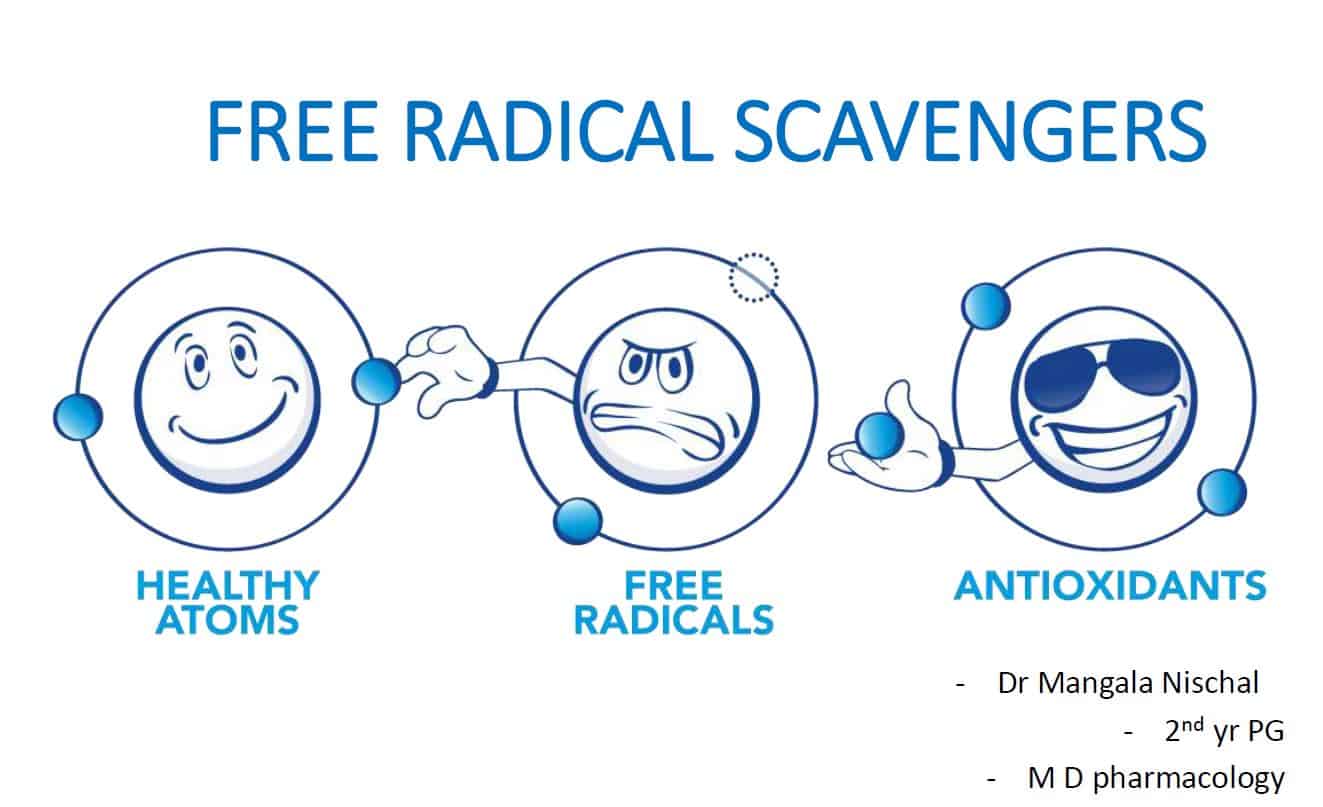
Picture from slide show Free radical scavengers by Dr Mangala Nischal
Oxidative Stress Damage
There are a variety of issues that oxidative stress can cause – some of the more serious issues include Alzheimer’s Disease, Parkinson’s Disease, cancer, heart disorders, heart failure, heart attack, blood vessel disorders, gene mutations, chronic fatigue syndrome and inflammatory diseases.
Another issue, though, is that of premature ageing. Of course, this may pale in comparison to those listed above; however, it is still a very real and imminent threat.
The biggest cause of oxidative stress damage to your skin is due to UV rays. Of course, this makes perfect sense when you consider just how damaging the sun can be to your skin if you head out without sun protection. This means it is vital to wear sunscreen in order to prevent the major cause of oxidative stress damage in premature ageing. Additionally, free radicals break down collagen production, which is a major cause of premature ageing.
Reduce The Risk of Oxidative Stress
If you want to reduce the risk of oxidative stress then the most effective way to do so is by fighting free radicals. So, here’s how to do that.
- Avoid hydrogenated fats (vegetable oils, margarine, commercially baked goods, processed foods)
- Improve your indoor air quality and avoid pollutants and pollution.
- Do not consume food that has been cooked in oils at high heat.
- Do not smoke or spend time in the company of smokers.
- Avoid drinking water that has been chlorine treated. Get a water filter that filters out chlorine.
- Avoid dehydration.
- Be mindful of your sugar intake and animal proteins.
- Avoid living near waste dumps or too close to power lines.
- Avoid food containing preservatives.
- Only take medications when absolutely necessary.
- Avoid using cleaning supplies that contain harmful chemicals.
- Limit your alcohol intake.
- Avoid exposure to radiation.
- Buy organic to avoid pesticides.
- Take steps to self-care to avoid stress.
- Wear sunblock every time you leave the house, no matter how short the trip (especially if you live in a warm and sunny region).
Your body is creating free radicals on a daily basis, but that doesn’t mean you have to fall prey to its damage of premature ageing and potential disease. Take every opportunity listed above to avoid oxidative stress.
Anti-Ageing Tips
If you want to find ways to slow down the ageing process check out these 3 guides about anti-ageing