
Stress is what happens when you have so much to deal with emotionally or physically, and the burdens start to overwhelm you.
This is why you can deal with many stressful situations and then all of a sudden something minor like dropping a glass of milk can make you start crying or feels like the final straw.
When stress builds up, it can feel as if it’s all too much to handle and then you end up doing nothing. Or worse, you start trying to deal with the stress by using alcohol or other unhealthy coping mechanisms. Dealing with stress head-on is always best and here are 10 ways that you can effectively do that.
1. Know Your Stressors
Sometimes people aren’t prepared for handling stress because they don’t know exactly what it is about their life that’s causing the stress reaction. By understanding what causes you stress, you can manage and eliminate it.
Fear and anxiety is a stressor. You can feel this kind of stress when you start playing the “what if” game – what if you lose your job, what if you can’t pay your bills, what if your partner breaks up with you, what if you get sick, etc.
This takes you out of the present day and causes your mind to live in a state of what “could” happen in the future. It’s worrying about something that hasn’t happened and may never happen.
 Issues with people can also be a stressor. You could have people in your life that you simply don’t get along with or who are actively unpleasant towards you and don’t have your best interests at heart. Or you could have family members who are involved in situations that are bad and you feel the stress from that.
Leaving your normal way of life can be a stressor. This includes things like taking on a new job or leaving one, moving to a new home or new town, ending a relationship or starting one, going to college or graduating or having a child or having a child move out.
It’s anything that shakes up how you routinely live your life. Health issues can be a stressor. Whenever you not feeling well or you’re dealing with a chronic health problem, it can cause stress.
You feel the stress more when the health issue gets in the way of you being able to handle your day-to-day activities or your job. Job performance, both good and bad, can be a stressor.
When you do well at work, you may feel the stress and pressure to continually outdo yourself. When you do poorly, you may fear the boss’s reaction or the loss of your job.
Work and family balance is another stressor.
You can feel pulled in two directions and feel like your life isn’t balanced. This can cause you to feel stressed that you’re not able to do your best at work or at home because your time is being stretched too thin.
2. Note Down Your Stressors
You can’t fight what you can’t see coming. But when you write down what you’re going to be handling that day, it helps you deal with stress.
It does this because you’ll be identifying all the situations for that day and what the potential stressors are going to be.
Identify what it is about the situation (or the person) that’s going to be in your day that’s causing you to feel the stress.
For example, if you have to attend your child’s school for an event and your ex is going to be there, you should know ahead of time how to handle the negative emotions that will rise up.
Maybe you can work out a way to minimize interaction, too.
3. Discover the Power of No
One common cause of stress is being too busy saying yes to others that you end up saying no to yourself. Know your limitations and don’t exceed them. Every day there are going to be people and situations that want you to say yes to and give your time and energy.
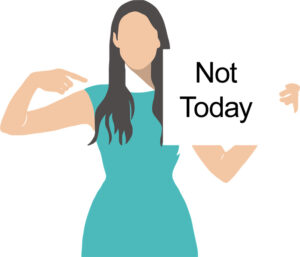 But being a consistent “yes” person is the road to stress. You can’t take time for yourself or what you really want to do if you don’t practice using the power of no. Most people refrain from saying no out of fear that they’ll appear selfish, but saying no to someone isn’t selfish.
It’s practising the art of self-care. When you have a problem telling other people no, or even telling yourself no to things, you add to your workload and can over-do what you’re capable of.
You’ll end up – not only stressed – but your immune system can take a hit as well since stress lowers your body’s immune system defences. Learning to say no can free you from the guilt that comes along with saying yes.
Many people only agree to something because they feel guilted into it or they guilt themselves into it. Just keep in mind that by saying no, you’re taking care of your body and that’s a good thing.
When you say no, let that be your one-word explanation. If someone asks, “why not” in response to your no, recognize that as a boundary issue. You don’t owe anyone a reason. By saying no, you free yourself from overextending your own time and causing yourself unnecessary stress.
4. Get Enough Sleep

When you don’t get enough sleep, it can cause a delayed reaction time in situations such as driving or trying to do your job. It also causes memory problems, weight gain, and can lead to serious health issues.
Not getting the right amount of sleep can cause stress and worsen the stress you may already have. A lack of sleep causes your decision-making ability to be affected and you can end up making poor choices that increase your stress.
This happens when you get tired and you end up not really wanting to deal with whatever you’re trying to handle. So you end up saying no to good opportunities and yes to bad ones.
The lack of sleep can cause a cycle. When you don’t get enough rest, it causes stress, which in turn causes insomnia. With each feeding into the other, it can make your stress level increase and reach the point where you find it difficult to deal with even minor problems.
5. Stop Ignoring Problems
You might believe that it’s better not to deal with an issue that’s causing you stress – that if you don’t handle it, you’re protecting yourself. But what you’re doing is actually making your stress worse.
Common problems that people don’t like to deal with, yet cause stress are:
- home repairs
- car repairs
- financial problems
- children or teenage behaviour
- arguments/issues with your spouse
- family problems
- environmental problems
- fear of world problems
When a problem arises, deal with it as soon as possible.
If you put it off, the problem can only get bigger and when it grows, it’ll take more of your energy and resources to fix. One of the best ways to deal with a problem is to first recognise what the problem is, then engage in some form of communication to start solving it.
For example, a financial problem might involve phoning the credit card company to get an extension.
Problems don’t ride off into the sunset just because they aren’t dealt with. They linger, quietly nagging at the back of your mind even while you’re trying to ignore them. This internal nagging is at work building your stress. Face your problems, deal with them head-on, and free yourself from stress.
6. Find a Hobby You Enjoy
When you find something you like doing, it acts as a stress reliever because it gives you an outlet. A hobby can be a way for you to release the anxiety and pent-up emotions that go along with dealing with stress.
 You can get involved in music such as finding new songs or new bands. You can check out the local music scene where you live and attend free music festivals or shows for singers and bands just getting started.
Painting and other creative things such as sketching or colouring can be a hobby that works as a stress outlet.
There’s also journaling. You don’t have to be good at writing to journal. It’s just putting words down that are talking about how you’re feeling or what’s gone on during your day.
Some people get into gardening. You can do vegetable and fruit or flowering gardening.
You can do a mixture of all three. Taking up knitting or crocheting is a great hobby that can help you deal with stress. You can learn a new skill such as a second language. Or you can learn how to play an instrument.
You can get involved in community theatre or take acting classes. Going for regular hikes to explore new places is a great way to deal with stress. So is volunteering. By investing yourself in someone else, it successfully manages stress.
7. Create a To-Do List

You might wonder why creating a to-do list can help you manage stress. The answer is because when stress hits, you feel like everything is going wrong. You feel like nothing is within your ability to cope.
This feeling of being out of control can increase your stress level. Sometimes stress develops because people feel like they have so much to do or to overcome that it causes action paralysis, which then worsens stress.
By creating a to-do list, it helps a person prioritise the important things and they’re able to focus on getting one thing at a time accomplished. Rather than focusing on what they have to do in its entirety, which can make stress rise, they’re able to get through the day by choosing bite-size action steps.
When you have a step-by-step to-do list it allows you to feel like you’re in control. This works well even if you don’t necessarily have a lot on your plate to handle. A physical list takes the pressure off your mental checklist. And when you cross things off as “done” you’ll feel a sense of accomplishment and you’ll see you do actually get things done.
8. Find Your Support System
 One of the worst things about stress is when you try to keep it all inside. When your job isn’t working out well, your partner isn’t being helpful, and your kids are constantly pushing your buttons, you need a way to come to terms with the stress that you’re feeling.
If you don’t let it out, the stress pressure builds. You need to have someone to talk to about what you’re going through. This someone may not be able to do anything to change your situation but by simply being there to listen, it relieves you of the buildup you’re feeling. Talking through what’s happening with you and what’s causing your stress makes you feel better even if the situation is still present.
Your support can be a trusted friend, a relative or a romantic partner. Sharing how you’re feeling relieves the emotional toll such as anxiety and depression that are often linked to stress.
9. Create a Strategy
Every single bit of stress in your life can be traced back to a trigger.
It’s always cause and then effect. Something happens and there’s a mental, emotional or physical reaction. There are consequences or changes that led to the stress.
For example, your boss gives you a better position. You make more money. Now you’re stressed. Not because you got the position that you wanted, but because there are more responsibilities. It might be more time away from home. You might feel worried that you’re not up to par.
Or you lose your job and you don’t know how to pay the bills. That’s a big amount of stress!
What you have to do when stress hits, is trace backwards to get to the root of your stress. When you find that, you can create a strategy to eliminate the stress.
If you take the new position at work, have a plan to enlist more help at home or hire outside help. If you’re worried you’re not knowledgeable enough about the new position, ask for help such as more training or take a course. Your strategy should make you proactive and show you what you need to do to help you deal with your stress.
10. Let Go
 By wasting time worrying and trying to find a fix for the unfixable, you’re creating more stress.
There are some things that require a great deal of work to solve them and to stress about it during that time can be draining on you.
Sometimes it’s good to just let go – take a deep breathe and use affirmations to help relieve the stress.
“I am not stressed”
“Everything will sort itself out”
“I enjoy life”
==================
Self Care
In order to deal with stress, caring for yourself is extremely important and often neglected. To help you do that I have some great free guides for you:
Healthy Habits
10 Ways to Practice Self Care
Practice Self Love with Journaling
Fill in the form below to download all 3 guides for FREE!